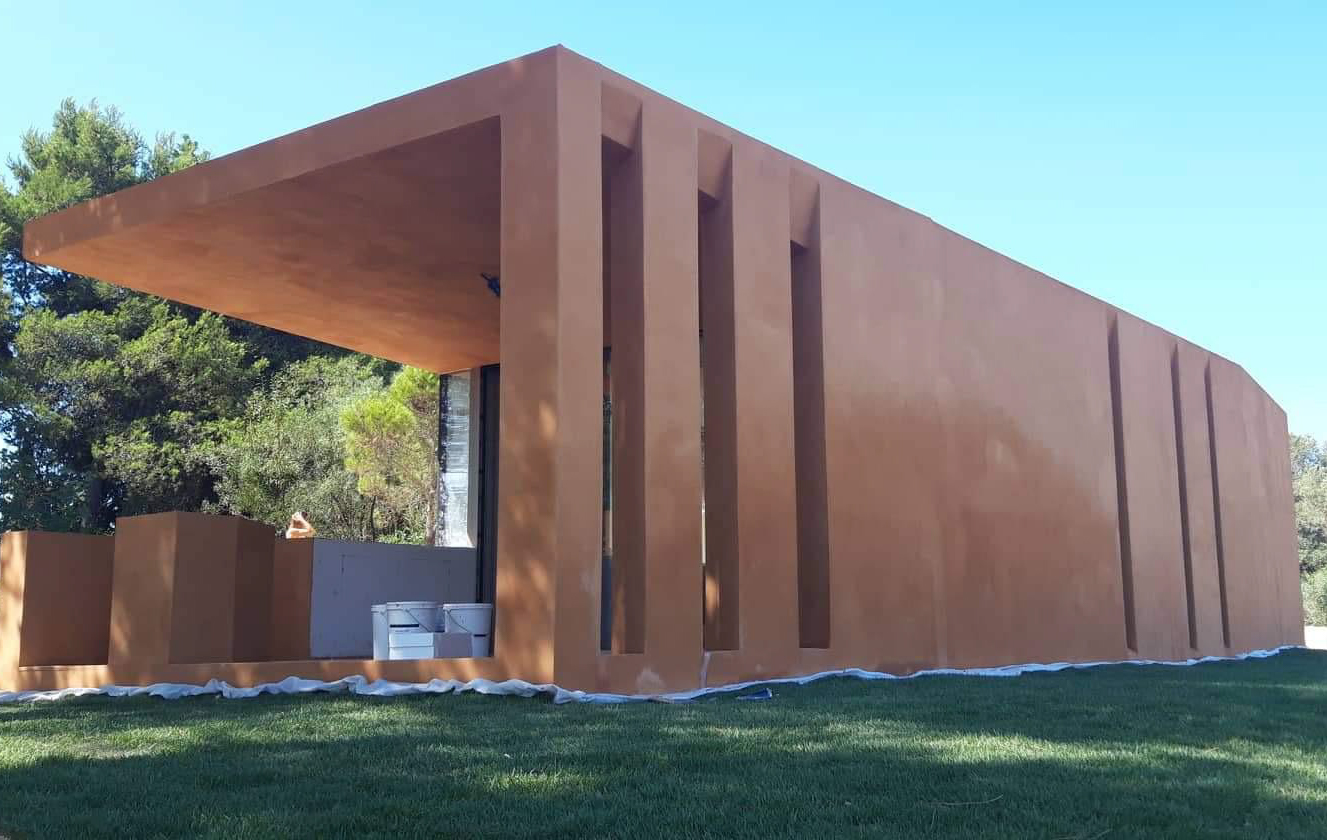
How to choose a natural exterior coating for façades, patios and walls
More and more architecture and renovation projects are looking for materials capable of protecting outdoor spaces without compromising on aesthetics. Façades, patios and walls are constantly exposed to sunlight, rain, temperature changes and moisture, so choosing the right finish is essential to keep them in good condition for longer.
In this context, a natural exterior coating has become a very interesting alternative to more industrial solutions. Its value does not lie only in its appearance. It also makes it possible to work with mineral materials, breathable and durable materials that integrate more naturally into the architecture and its surroundings.
At Naturclay, we develop high-end natural decorative coatings for projects seeking quality, resistance and personality. Our solutions transform façades, patios and walls into characterful surfaces suited to homes, hotels, restaurants, commercial spaces and renovation projects.
What should a natural exterior coating provide?
A natural exterior coating must meet different requirements from an indoor finish. In addition to creating an attractive appearance, it needs to withstand continuous exposure to weather conditions and properly protect the substrate on which it is applied.
Resistance to rainwater, solar radiation and thermal changes is essential. It is also important for the material to allow the wall to breathe, preventing moisture from becoming trapped inside. When an exterior surface cannot release water vapour properly, flaking, stains, cracks or loss of adhesion may appear.
The coating must also be suitable for the substrate and the use of the space. A highly exposed façade does not require exactly the same performance as a sheltered inner patio or a garden wall. Before choosing the finish, the condition of the surface, its orientation, the climate and the desired aesthetic result should all be assessed.
Lime and mineral materials outdoors
Lime is one of the most interesting traditional materials for exterior surfaces. It has been used in architecture for centuries and remains highly valued for its mineral character, breathability and ability to work in both new buildings and renovation projects.
Unlike some synthetic coatings, lime finishes allow the substrate to breathe. This property helps regulate moisture and supports better conservation of walls, particularly in older buildings or projects where compatibility with the original materials is important.
Mineral materials also provide an aesthetic that is difficult to reproduce with completely uniform finishes. Their subtle variations in tone and texture create living surfaces that change with the light and add depth to façades, patios and outdoor walls.
Natural coatings for façades
The façade is one of the most important elements of any building. As well as protecting the interior, it defines the building’s image and its relationship with the surroundings. A natural exterior coating can renew a façade without erasing its identity or making it look excessively artificial.
Mineral finishes work especially well in Mediterranean homes, rural houses, hotels, renovation projects and contemporary buildings seeking a calm, timeless aesthetic. They can create smooth, understated surfaces or more textured and expressive finishes.
Before applying any coating, the condition of the façade must be checked. Cracks, damp areas, poorly adhered sections or incompatible paint residues should be treated beforehand. Correct preparation of the substrate is just as important as the quality of the material itself.
Natural finishes for patios and outdoor areas
Patios are transitional spaces between indoors and outdoors. The coating plays an essential role in creating visual continuity and a sense of calm. Natural finishes can integrate walls, planters, built-in benches and other architectural elements into a more coherent whole.
In small patios, light colours can increase the feeling of brightness and space. In larger areas, mineral tones and soft textures help create welcoming environments without overloading the design. These coatings also combine very well with wood, stone, vegetation and continuous flooring.
They are equally suitable for terraces, porches, relaxation areas and the outdoor spaces of hotels or restaurants. In these projects, the choice of material contributes to the user experience and reinforces the identity of the place.

Coatings for outdoor walls and enclosures
Garden walls, enclosures and perimeter walls are often exposed to ground moisture, rain and significant temperature changes. The right coating helps protect these surfaces and visually integrate them into the landscape.
Rather than treating the wall as merely functional, natural coatings can turn it into an active part of the outdoor design. Their texture and colours can relate to the vegetation, flooring and architecture of the home to create a more harmonious result.
In these cases, it is especially important to assess the source of any moisture and ensure the substrate is properly prepared. The coating should form part of a complete system and should not be used to conceal existing problems that require a specific solution.
Resistance and aesthetics in the same finish
Choosing an exterior coating does not mean deciding between functionality and design. High-quality natural materials can combine resistance, durability and a refined aesthetic. The result is a surface that protects the substrate while adding personality to the project.
One of their main advantages is timelessness. Mineral finishes depend less on passing trends because their value lies in the material, the texture and the way they react to light. This makes it possible to create outdoor spaces that remain relevant for years.
Their ability to integrate with other materials also makes coherent design easier. Stone, wood, ceramics, vegetation and natural coatings can coexist within the same project without competing with one another.
How to choose the right exterior coating
To make the right choice, it is advisable to analyse the substrate, the exposure of the space, the climate and the desired finish. It is also important to consider whether the project is a new build, a renovation or a purely aesthetic update of an existing surface.
Texture, colour and protection level should be selected according to the project. A highly exposed façade may require a different system from a sheltered patio or protected wall. Likewise, a historic building needs materials compatible with the original substrate and its behaviour in relation to moisture.
In every case, professional application is essential. Surface preparation, respect for drying times and the correct execution of each layer determine both the durability and final appearance of the coating.
Naturclay, natural solutions for façades, patios and walls
Naturclay products are designed to transform exterior surfaces into spaces with identity. It is not simply a matter of applying a coating, but of protecting, enhancing and creating a more coherent relationship between architecture and materials.
With our high-end natural decorative solutions, façades, patios and walls can be finished with high-quality mineral coatings adapted to residential and professional projects seeking resistance, sustainability and personality.
If you want to choose a natural exterior coating that combines aesthetics and durability, Naturclay offers materials and finishes designed to create more conscious, elegant and timeless outdoor spaces.